Wednesday, July 10, 2013

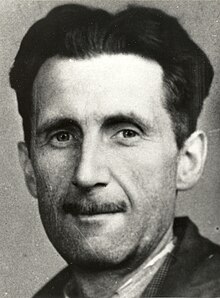
1984

     When I began AP summer reading and had to read How to Read Literature Like a Professor, I was shocked when the author claimed that there is only one story.  He described how many works follow a common pattern.  As I read 1984, I truly understood that.  Since I've already read Anthem, Fahrenheit 451, and Brave New World, I began to feel like I'd overdosed on dystopian novels because I noticed all the similarities.  Anthem is my favorite, but in terms of which is the best literary work, I'm not really sure.  I just know it's not Fahrenheit 451.
     There is one quote in 1984 that stuck out to me, especially the last sentence.  "The book fascinated him, or more exactly it reassured him.  In a sense it told him nothing new, but that was part of the attraction.  It said what he would have said, if it had been possible for him to set his scattered thoughts in order.  It was the product of a mind similar to his own, but enormously more powerful, more systematic, less fear-ridden.  The best books, he perceived, are those that tell you what you know already."

Lindke and Lecture 23: The Answers

     Questions:  Does Lecture 22 apply only before conversion?  Can contrition proceed from love of God, as in a person being sorry they sinned against the very God who died for them?
     According to Lindke's paper, "Apology, Article XII (V):  Of Repentance," repentance has two parts:
  • Contrition:  Terrors smiting the conscience through the knowledge of sin 
  • Faith:  Believes that, for Christ's sake, sins are forgiven, comforts the conscience and delivers from terrors
     Repentance can be described in two ways:
  • Stricte dicta:  Contrition
  • Late dicta:  Contrition and faith
     Lecture 23 states, "One of the principal reasons why many at this point mingle Law and Gospel is that they fail to distinguish the daily repentance of Christians from the repentance which precedes faith."  At all times, contrition can be defined as "being bruised or crushed" (Lindke quotes Our Great Heritage).  What Walther is pointing to with his distinction is that "because Christians are both sinners and saints, their faith in the Gospel can have an ameliorating effect on the fear inherent in their contrition.  The dominant emotion then can become sorrow, based not on terror before the God of judgment, but on the knowledge that we have offended the gracious Lord of our salvation (Lindke)."  However, Lindke goes on to caution against focusing too much on this differentiation, saying, "While this distinction has validity and value in understanding the sorrow contrite Christians feel, it tends to relegate God's law to a secondary position in contrition.  Walther's statement stands:  'Contrition is solely an effect of the Law.'  David was crushed when Nathan said, 'You are the man,' not when he said, 'The Lord has taken away your sin.'"
      Walther writes, "David had contrition together with faith.  That is, indeed, a sacrifice with which God is pleased.  Contrition of this kind is not a mere effect of the Law, produced by the Law alone, but it is at the same time an operation of the Gospel.  By the Gospel the love of God enters a person's heart, and when contrition proceeds from love of God, it is indeed a truly sweet sorrow, acceptable to God."  I typed this quote before reading Lindke's article; when I came back to it today, my ears perked up.  To me, this sounds like Walther is distinguishing repentance stricte dicta from late dicta.

Short Answer:  Before conversion, contrition cannot proceed from love of God.  Afterward, it may be seasoned with love, but this is not necessary.  The bottom line is that contrition is an effect of the law.

Vocab:
Ameliorate:  to make better, improve

Friday, June 28, 2013

Lecture 22: Short and Sweet

     Short Summary:  Thesis XI attacks the false teaching that contrition is worthless if it comes from fear of God's wrath and punishment rather than love for God.
     Commentary:  At first, this made no sense to me; how would you be contrite out of love?  As it turns out, that's the point.  The idea is that we should be sorry for sins because we have love for God in our hearts (point:  we have good hearts) rather than a selfish fear of punishment.  The clearest Biblical examples refuting this are the jailer at Philippi and the crowd at Pentecost.  Before conversion, there is no love for God in our hearts; they are hostile rather than good.
     As I began writing this post, I started to wonder if this applies to us only before conversion; after conversion, can we be sorry for our sins because they hurt God?  Well, let's begin with four pertinent details of Lecture 22 to provide a background for investigation.
    After conversion, the Law doesn't stop working.  It still acts as a mirror; Romans 3: 20 states, "Through the law we become conscious of sin."  Walther comments, "Here the apostle states the function of the Law:  it produces, not love, but the knowledge of sin."  He also later writes, "Even when there is love of God in a person's heart, it will be spoiled by the devil."  Walther quotes the Apology of the Augsburg Confession, "When we speak de contritione, that is, regarding genuine contrition, we cut out those innumerable questions which they cast up, viz., whether a person's contrition flows from love of God or from fear of punishment.  For these are nothing but mere words and a useless babbling of persons who have never experienced the state of mind of a terrified conscience.  But we say that contrition is the true terror of conscience, when it begins to feel its sin and the anger of God against sin and is sorry for having sinned."
     With that said, I'm not going to answer the questions yet.  Lecture 23, which I've read, expands upon the subject, and I also want to check out a paper from the WLS Essay file, Rev. Allen Lindke's "Apology, Article XII (V):  Of Repentance."
     Vocab:  
Τοῦτό ἐστι τὸ σῶμα μου = Touto mou estin to soma = (literal translation) "This is the body of me," Jesus' words in the Lord's Supper
Nitimur in vetitum semper cupimusque negata = We are ever striving after what is forbidden, and coveting what is denied us.

Friday, June 14, 2013

Lectures 20 and 21

     I have once again picked up Walther's Law and Gospel, this time with a new reading strategy based on a teacher's advice.  I am trying to read it like other books, not study, but here are some highlights.
     Lecture 20 describes "faith unfeigned," genuine faith, while dispatching the false doctrine that faith, once present, cannot be lost.  Genuine faith is not simply believing that the Bible's teachings are true; living faith changes the heart.
     Lecture 21 presents two explanations of justification.  I've written them as equations.
Catholic:  Faith + Love = Justification
Lutheran:  Faith = Justification, then Faith → Love
    In chemistry, → means "yields;" Walther would probably say "produces."  Faith yields love and good works, but they are not what gives it power to justify.  At one point, I wondered why it mattered what came when; if faith naturally produces love, who cares when justification takes place?  The problem is that if I believe I am justified partially by the love, or good works, that I add to faith, I am relying on work righteousness.  The burden of salvation is on me, and though I can't carry it, I don't look to the One who can.
     The analogy that drove Lecture 21 home for me was that of an apple tree.  You don't add apples (love) to an apple tree (faith); the tree simply produces them!  I'd heard the second part of this analogy before, but not the first.
Vocab:
     Forma:  The quality that makes something what it is.  The forma of applesauce is apples.  According to Catholic teaching, love is the forma of faith.
     Fides Formata:  According to Catholic teaching, faith with the proper form; that is, faith with love added to it.
     Fides Informis:  According to Catholic teaching, faith without the proper form; that is, faith without love added to it.

Tuesday, September 4, 2012

All These Years Never Heard It Like This

Book:  Mere Christianity
Author:  C.S. Lewis

     I read this book on high alert because I was acutely aware that C.S. Lewis is not a confessional, orthodox, conservative Lutheran.  Reading theology books by unreliable sources can be more dangerous than reading secular authors' writing, so I attempted to constantly evaluate what I read.  I wish I could discuss this with a reliable person...I should work on that.  I can truly understand why this book would be perfect for a discussion group to read together.  Overall, though, I agreed with most of the things he said.  In Walther's Law and Gospel, I'm on Lecture 20, and some of the points he makes give me a little deja vu, flashbacks to the C.S. Lewis ideas that redesigned my thought process.
     There were parts of this book that really hit hard.  Several of the sections were painful to read because they were just way too true in my life.  A lot of the chapters challenged false perceptions that I didn't know I had. In some sections, he explained things I already knew, but I'd never quite thought of them in the same way.  The different perspective gave them power, and they made an impact.  For example, C.S. Lewis reminds us that God cares about our hearts, what kind of people we are becoming, not just our outward actions.  In more theological terms, God looks at the heart.  In another chapter, Lewis focuses on the idea that much of the "goodness" that we see in ourselves is a result of things God gave us, such as our temperament or our environments, past and present.  We can't see the difference between goodness produced by the Holy Spirit and this influenced goodness, but God can.  I may not get angry with a family member because God gave me a calm temperament, but if a person who is naturally explosive keeps his cool, it is more significant.  I'm not exactly sure about the theological reliability of this second idea, so I'll investigate the Bible, hopefully have a conversation, and compose an update.
     Before I close this post, I'd like to mention that the first section of this book reminds me of many of the themes of Lee Strobel's books.  It is another logical approach to something that ultimately defies human comprehension, but that doesn't mean it isn't valuable or useful.
     In general summary, this book is beneficial for anyone to read.  It may have resulted from radio broadcasts designed to introduce people to Christianity, but it also has more than enough material for Christians of all maturites to chew on.

Sunday, August 19, 2012

Going on Nineteen

Book:  The Proper Distinction Between Law and Gospel
Lecture:  19

     This will be a rather reactionary summary.  I read this lecture straight through, taking only two notes, and I think I got more out of it.  One of my notes:  Properly speaking, grace is never in man's, but in God's heart.
     The lecture begins by stating the place of conversion in a Christian's life.  Walther then goes on to discourse on the place of feelings in a Christian's life.  At first, I thought the topic was way beyond me, since I thought he was contradicting the belief that salvation relies on God, who is outside of us, and not on our emotions.  I thought he was saying that to be a Christian, you had to be able to feel God in your heart.  As I read further, I began to understand that feelings are something that will naturally come with faith.  My first turning point was where Walther states, "First a person must believe; after that he may feel.  Feeling proceeds from faith, not faith from feeling."
     Walther finishes the lecture by describing what faith is, using Hebrews 11:1 and the example of the lepers who begged Jesus for help.  He explains that if faith is a "firm, reliant confidence, not doubting, not wavering," faith cannot be based on feelings.  He then uses the story of Mary and Joseph searching for Jesus while he was at the temple to show that if we look to earthly things for help and comfort, like friends or our own ideas and feelings, we will not find Christ; he is only found with His Father and His Father's Word.
     Incidentally, my lightbulb moment is also my first copy and paste text, from a lovely little website called www.lutherantheology.com.  I was ecstatic when I found it, not to mention discovering that Walther's Law and Gospel is public domain.

My Lightbulb Moment:  "Some have been highly favored in being led an easy way by God, always enjoying a beautiful, pleasant feeling and never being in need of strong wrestling. For persons who always find their experiences in harmony with the Word of God need not struggle for that harmony. Others, however, are nearly always led by God through darkness, great anguish, grievous doubts, and diverse afflictions. In the latter case we must be careful to distinguish between one who is dead and one who is afflicted. The distinction is not difficult. If I am worried about my lack of the feeling of grace for which I am earnestly longing, that is proof that I am a true Christian. For one who desires to believe is already a believer. For how could a person possibly desire to believe something which he regards untrue? No man desires to be deceived. As soon as I want to believe something, I am secretly believing it. This is a point for pastors to note when they are dealing with individual souls."

Monday, August 13, 2012

You Are Eighteen

Book:  The Proper Distinction Between Law and Gospel
Lecture:  18

Summary/Highlights
    Few people have a more stressful life than a prisoner who is awaiting execution but has heard a rumor that he has been pardoned.  God could leave us all in a similar situation, but thankfully, he does not.  If our loving God sacrificed his only Son to save us, how could he do this?  From the moment Jesus was born, God spread his message of grace through the angels and shepherds, and Jesus continued this with the Great Commission.
     Walther follows this with a recap of absolution, reviewing Matthew 9.  He then cites Luther on the topic of forgiveness.  He supports the doctrine that the power of announcing absolution has been given to men with Matthew 18:18 and John 20:23.  We hear the news of forgiveness from men, but it is God who is speaking through them.  When we are in need of assurance of forgiveness, God has given us baptism, communion, absolution, and His Word.
     If you insulted someone, how would you know you were forgiven?  It would be foolish to simply wait until you felt at peace with them in your heart.  If he or she gave you a gift, you could not be sure that they had forgiven you; maybe he would simply be showing you that, unlike yourself, he was a kind person.  No, you would know you were forgiven when you heard him tell you that you were forgiven.  In the same way, our feelings cannot tell us God's attitude, and he sends rain and sun on both the good and the evil.  We need to hear our forgiveness from him through the means of grace.
     "The true interpretation of the words of Christ:  'Whosesoever sins ye remit, they are remitted unto them,' etc., is, that they establish the authority, not of the person who speaks, but of those who believe these words."  In contrast, the Papacy teaches that when the pope and priests absolve or refuse forgiveness, it happens because they possess this special power and because they said so.  No, the power is the power Christ and his sacrifice; we announce it as his representatives.
     The keys are not based upon our contirition or worthiness; our contrition, works, believing heart, and all that we are, must be built upon the keys.  "With entire boldness we must confidently trust in them as in God's Word, never doubting in the least...what the keys state and confer is as certain as if it were stated and conferred by God Himself.  For it is certainly He that is speaking in this matter, since it is His command and Word, not the word or command of man.  If you doubt this, you make God a liar, pervert His ordinance, and found His keys on your contrition and worthiness."
     God does not first bind or loose sins in heaven, then let us represent this by binding and loosing on earth.  We could not know what he bound or loosed!  Also, the keys are the keys of heaven even though they are used on earth.  When we bind or loose, it is accounted as done, and there is no need for God to do it after.
     More random highlights:

  • In baptism, the water has no power of its own.  The power comes from the Spirit working through the Word.
  • Communion is all about God's grace and forgiveness
  • We can't ascend to God; He descended to us.  This means that good works earn us nothing.  All we need to do to be saved is believe.  We are given God's love and kindness as a free gift.
  • Contrition is necessary, but not as a means for acquiring forgiveness.  We can turn up our nose at a meal, but our rejection doesn't change the fact that it is available.  All men's sins are forgiven, but they can reject this forgiveness and refuse to believe it.
  • The worthiness, or lack of worthiness, of a pastor does not affect absolution; even wicked servants can spread a king's message.
Lightbulb Moment:  Don't ask whether your contrition is sufficient or of good quality; praise God for His absolution.